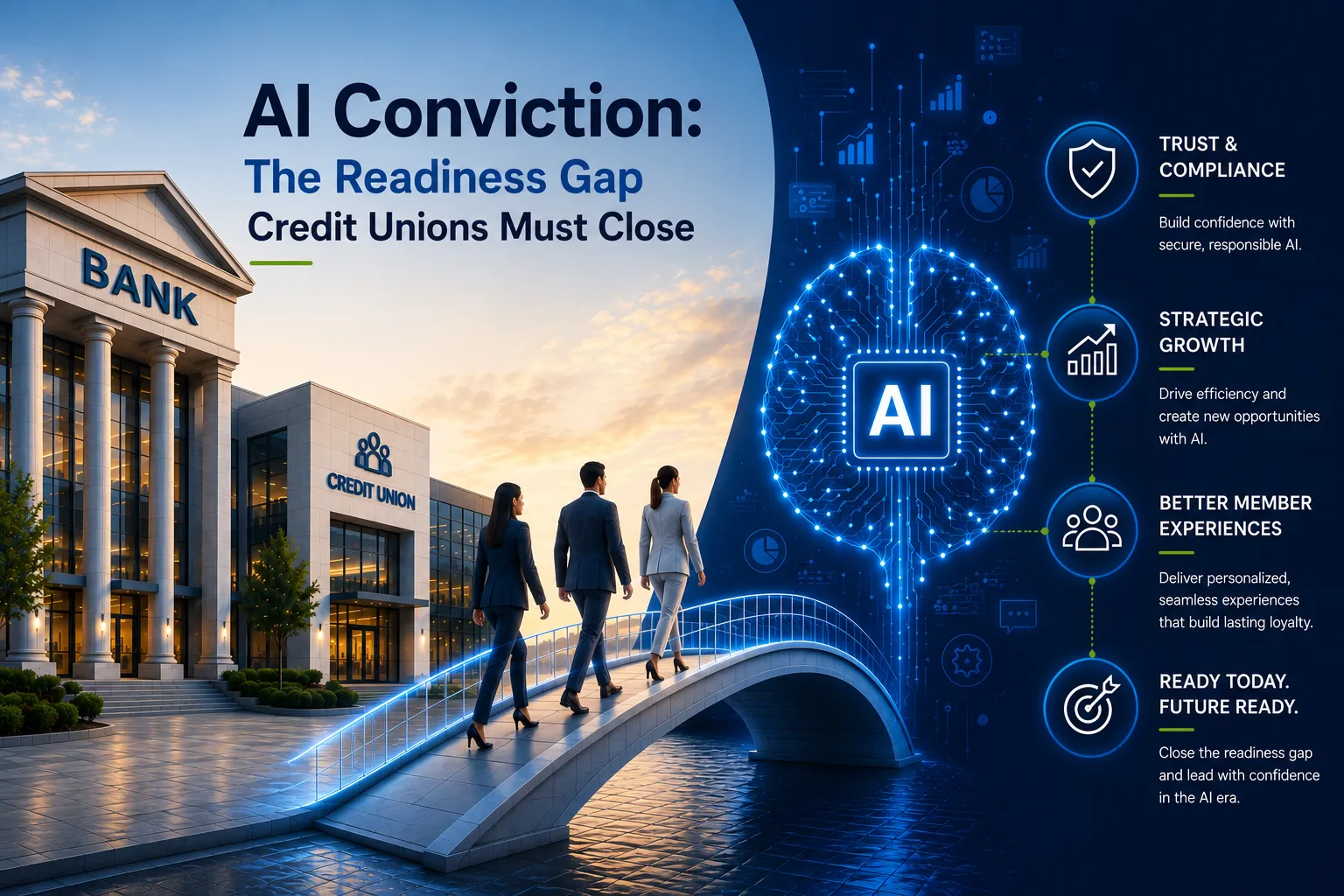


Credit unions have always competed on relationships. But today, delivering a great member experience also means responding faster, simplifying lending processes, protecting sensitive financial data, and helping employees manage growing workloads without adding unnecessary complexity.
AI tools can help credit unions address these challenges by supporting member engagement, lending workflows, fraud monitoring, and everyday operations.
However, not every AI solution solves the same problem. Some focus on member engagement, others support lending and credit analysis, and some help teams automate repetitive administrative work. Choosing the right AI software for credit unions starts with understanding where your institution needs the most support and how AI for credit union operations can address specific challenges.
This guide compares 10 AI tools for credit unions, outlining their primary use cases, potential benefits, and key considerations for adoption.
TL;DR
- AiVantage: Supports personalized member engagement through AI-powered hyper-personalization.
- Posh AI and interface.ai: Help improve member service through conversational AI and digital assistance.
- Zest AI and nCino: Support credit decisioning, underwriting, and lending workflows.
- Nasdaq Verafin and NICE Actimize: Help credit unions manage fraud detection and financial crime risks.
- Eltropy, ABBYY, and Microsoft 365 Copilot: Support member communication, document processing, and employee productivity.
Why Are Credit Unions Adopting AI Tools?
Running a credit union involves more than serving members. Teams also handle loan applications, paperwork, fraud checks, and compliance tasks. AI for credit union operations can help address these challenges by supporting routine tasks and giving employees more time to focus on member service.
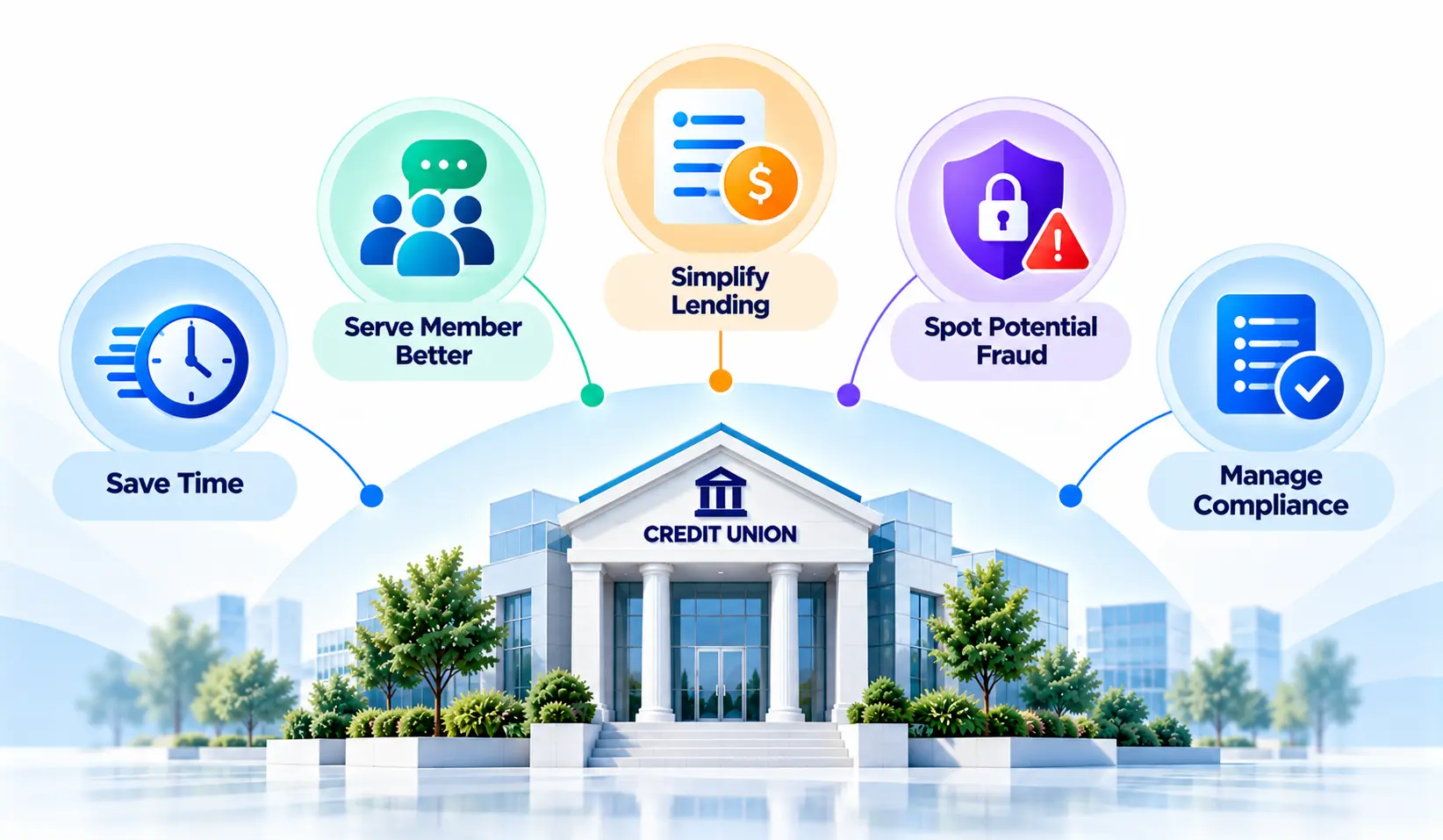
That’s why more credit unions are exploring AI tools for credit unions to:
- Save time: Reduce repetitive tasks and paperwork.
- Serve members better: Answer common questions faster.
- Simplify lending: Help teams review applications and documents.
- Spot potential fraud: Flag suspicious activity for further review.
- Manage compliance: Organize information and support routine checks.
The real value of AI in credit unions is giving employees more time to focus on members while making everyday work easier to manage.
Top 10 AI Tools for Credit Unions
The best AI tools for credit unions address different challenges, from member engagement to lending, fraud prevention, and document processing. The right choice depends on what your credit union wants to improve and how well a solution fits its existing systems.
1. AiVantage – Best for AI Marketing & Hyper-Personalized Member Engagement
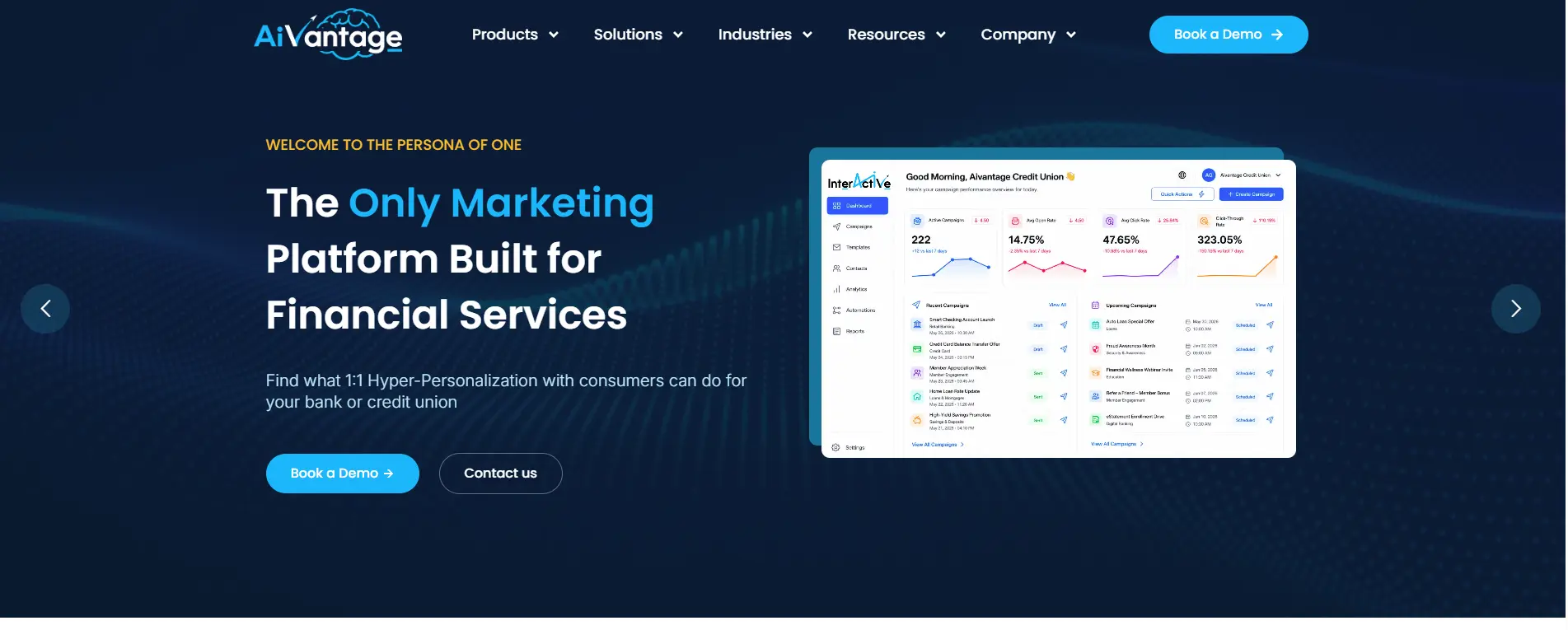
AiVantage focuses on helping financial institutions make member communications more personalized through its Interactive AI platform, an AI-powered 1:1 hyper-personalization platform.
For credit unions, the challenge isn’t always a lack of member data. It’s using that data to make communications more relevant. AiVantage’s approach helps institutions move beyond broad audience segments and create more individualized member engagement.
Potential use cases include:
- 1:1 Hyper-personalization member engagement: Tailor communications using available member data.
- Targeted marketing: Make outreach more relevant to members’ needs and interests.
- Engagement measurement: Review campaign responses to understand what resonates with members.
- Relationship building: Support more meaningful communication rather than relying only on generic campaigns.
Why consider AiVantage?
AiVantage is worth evaluating for credit unions looking to connect member data with personalized marketing and more meaningful engagement. Its InteractiveAI approach supports a more individualized communication strategy, while implementation should be evaluated against data availability, integration requirements, security controls, and governance needs.
Best fit: Credit unions prioritizing AI-powered marketing, hyper-personalized 1:1 member engagement, and data-driven communication strategies.
2. Posh AI
Posh AI helps credit unions handle routine member questions through AI-powered digital and voice assistants. These tools can answer common banking questions, support self-service, and route more complex issues to employees.
For credit unions looking to improve AI tools for credit union customer service, Posh AI can help extend support beyond regular business hours while allowing staff to focus on conversations that need a personal touch.
3. Zest AI
Zest AI helps credit unions use machine learning to assess credit risk and support lending decisions. Its solutions focus on AI-powered underwriting, explainable credit models, and fair lending analysis.
For credit unions, this can help streamline application reviews and assess borrowers using more detailed credit-risk insights. However, lenders should evaluate model performance, potential bias, explainability, and compliance with fair lending requirements before using AI in credit decisions.
4. Eltropy
Eltropy provides communication technology for credit unions, including messaging, video, and voice channels. Its tools help financial institutions communicate with members through the channels they already use.
Credit unions can explore Eltropy to centralize member conversations, support remote service, and make follow-ups easier to manage. Its relevance to AI-powered banking solutions depends on the specific products and AI capabilities selected.
5. interface.ai
interface.ai focuses on AI-powered banking experiences, including conversational assistance and voice-based member support. These capabilities can help credit unions handle routine inquiries, provide self-service options, and reduce pressure on contact center teams.
When evaluating interface.ai, credit unions should check which voice automation, authentication, and banking-system integrations are available in the proposed solution. The aim is to make support more convenient without compromising member privacy or security.
6. nCino
nCino offers cloud-based banking software with AI-supported capabilities designed to help financial institutions manage workflows and make information easier to use.
Its AI agents can assist with tasks across banking roles, including analysis, processing, and service. For credit unions, nCino is worth evaluating when looking to streamline lending and other banking processes. Before implementation, assess how its capabilities fit existing systems and whether they support the institution’s specific workflows.
7. Nasdaq Verafin
Nasdaq Verafin provides financial crime management technology that helps financial institutions investigate suspicious activity and identify potential fraud risks.
For credit unions, these tools can support transaction monitoring, fraud detection, and investigations into potentially suspicious patterns. They can also help teams manage the volume of alerts requiring review. AI and analytics should support—not replace—investigators’ judgment, with appropriate controls for reporting, documentation, and regulatory obligations.
8. NICE Actimize
NICE Actimize offers solutions for financial crime risk management, including fraud prevention, transaction monitoring, and anti-money laundering (AML).
Credit unions can consider these tools when they need stronger oversight of suspicious transactions and more structured investigation workflows. The right solution depends on the institution’s risk profile, transaction volumes, existing monitoring systems, and compliance requirements. Teams should confirm the specific AI capabilities and integration options included in the product they evaluate.
9. ABBYY
ABBYY helps financial institutions extract and process information from documents using intelligent document processing (IDP). Its technology can handle documents such as bank statements, tax forms, lending paperwork, and onboarding records.
For credit unions, AI document processing can reduce repetitive data entry and help employees move information into existing workflows more efficiently. Human review remains important when documents are incomplete, information conflicts, or decisions have financial and compliance implications.
10. Microsoft 365 Copilot
Microsoft 365 Copilot helps employees work with information across supported Microsoft 365 applications. Depending on the application and available access, it can assist with summarizing documents, drafting emails, organizing meeting notes, and analyzing information.
For credit union teams, these capabilities can make everyday administrative work easier. However, Copilot is a productivity assistant, not a substitute for specialized lending or fraud detection software. Credit unions should review permissions, data access, and internal AI policies before introducing it into employee workflows.
How to Choose the Right AI Tool for Your Credit Union?
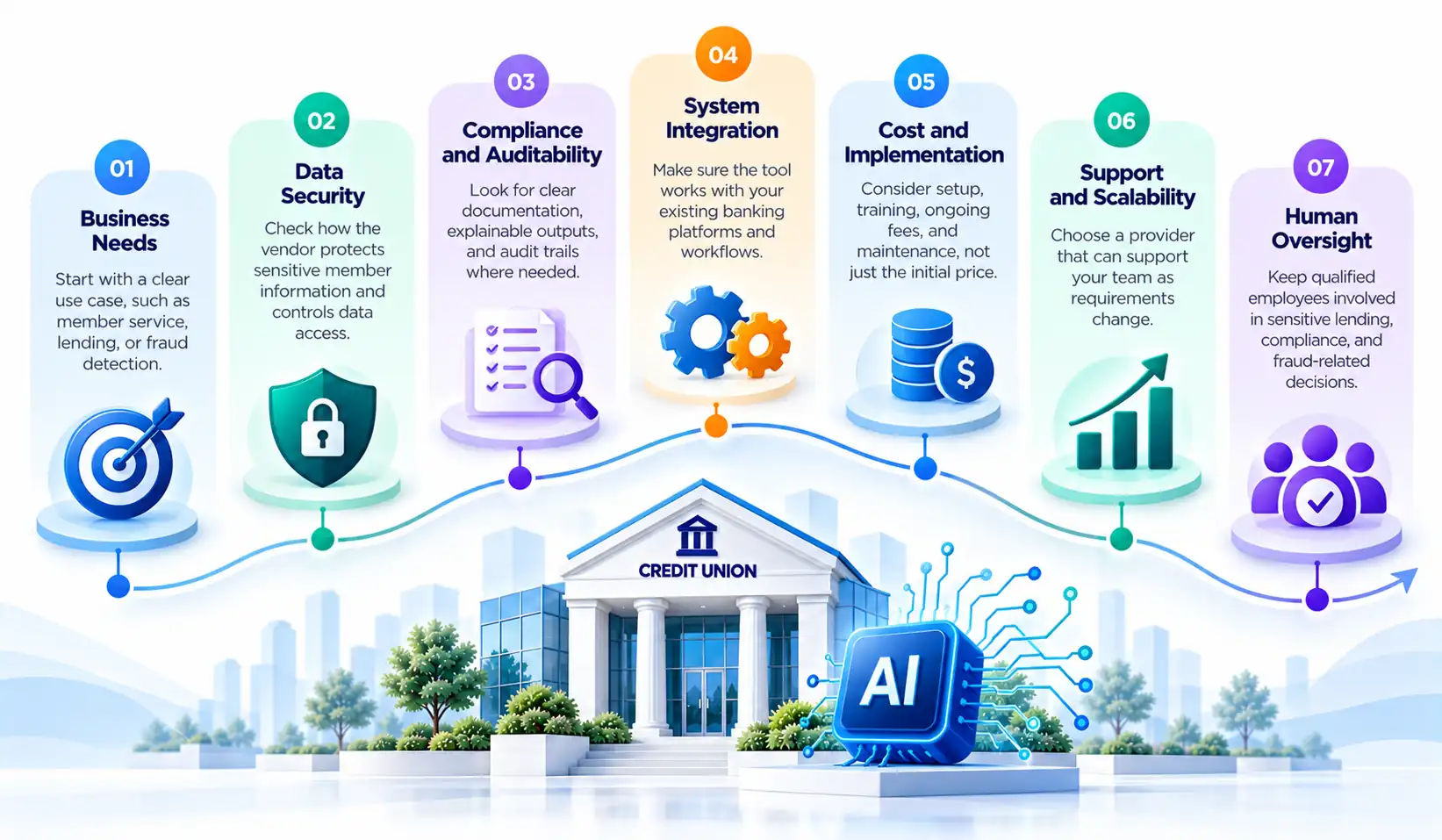
Not every AI tool solves the same problem. Before investing, identify what your credit union needs to improve and whether the technology fits your existing operations.
- Business needs: Start with a clear use case, such as member service, lending, or fraud detection.
- Data security: Check how the vendor protects sensitive member information and controls data access.
- Compliance and auditability: Look for clear documentation, explainable outputs, and audit trails where needed.
- System integration: Make sure the tool works with your existing banking platforms and workflows.
- Cost and implementation: Consider setup, training, ongoing fees, and maintenance, not just the initial price.
- Support and scalability: Choose a provider that can support your team as requirements change.
- Human oversight: Keep qualified employees involved in sensitive lending, compliance, and fraud-related decisions.
The best AI software for credit unions should solve a real operational problem, work within your risk requirements, and make life easier for both employees and members.
Benefits of Using AI Tools in Credit Unions
Summarize the operational, service and analytical benefits without repeating the entire tool list.
Not every AI tool solves the same problem. Before investing, identify what your credit union needs to improve and whether the technology fits your existing operations.
- Business needs: Start with a clear use case, such as member service, lending, or fraud detection.
- Data security: Check how the vendor protects sensitive member information and controls data access.
- Compliance and auditability: Look for clear documentation, explainable outputs, and audit trails where needed.
- System integration: Make sure the tool works with your existing banking platforms and workflows.
- Cost and implementation: Consider setup, training, ongoing fees, and maintenance, not just the initial price.
- Support and scalability: Choose a provider that can support your team as requirements change.
- Human oversight: Keep qualified employees involved in sensitive lending, compliance, and fraud-related decisions.
The best AI software for credit unions should solve a real operational problem, work within your risk requirements, and make life easier for both employees and members.
Final Thoughts
The right AI tools for credit unions can help simplify daily operations, improve member engagement, and give employees more time to focus on members. The key is to choose tools that address your actual challenges without adding unnecessary complexity.
Start with one clear goal, whether it’s personalizing member communications, streamlining lending, or improving fraud detection. Then evaluate each solution for security, integration, cost, and compliance.
If stronger member engagement is your priority, AiVantage is worth exploring for its personalized approach to financial services communication. The right technology should support your team and strengthen the member relationships that make credit unions different.
Frequently Asked Questions
1. What are the best AI tools for credit unions?
Some of the best AI tools for credit unions include AiVantage for personalized member engagement, Zest AI for lending, Posh AI for member service, and Nasdaq Verafin for fraud detection.
2. How is AI used in credit unions?
Artificial intelligence in credit unions supports member service, lending workflows, fraud detection, document processing, and routine task automation.
3. How can AI improve the member experience?
AI tools for member experience can help credit unions provide faster responses, personalized communications, and convenient self-service options.
4. Can AI help credit unions automate lending and credit analysis?
Yes. AI tools for credit union lending can support document review, credit risk analysis, and underwriting workflows. Human oversight remains important for lending decisions.
5. What should credit unions consider before adopting AI software?
Evaluate AI software for credit unions based on security, regulatory compliance, integration, implementation costs, scalability, and human oversight.
6. How can credit unions use AI while maintaining data security and compliance?
Credit unions should assess vendor security controls, restrict access to sensitive member data, maintain appropriate audit trails, and establish clear AI governance policies. Regular reviews can help identify risks and support compliance.