
A credit union can know a lot about its members and still struggle to make its marketing feel personal.
Why? Because knowing who a member is is not the same as knowing what matters to that member right now.
Filene’s research has found meaningful differences in how members spend, save, and manage their money, even beyond traditional demographic segments.
That raises a bigger question: if broad segments cannot capture every member’s needs, how can credit unions make each interaction more relevant?
AI marketing for credit unions offers one way forward. By connecting member data, behavioral signals, predictive analytics, and marketing automation, AI can help identify relevant opportunities and support more timely, personalized engagement.
The opportunity is not to send more messages. It is to make the right interaction more meaningful.
Key Highlights
- Use AI to analyze behavior, product relationships, digital activity, and communication patterns to understand changing Member needs.
- Deliver more relevant content, education, and offers based on individual Member behavior instead of relying only on broad segments.
- Use AI to personalize interactions across onboarding, digital banking, financial wellness, product education, and re-engagement.
How AI Marketing Can Improve Credit Union Member Engagement?
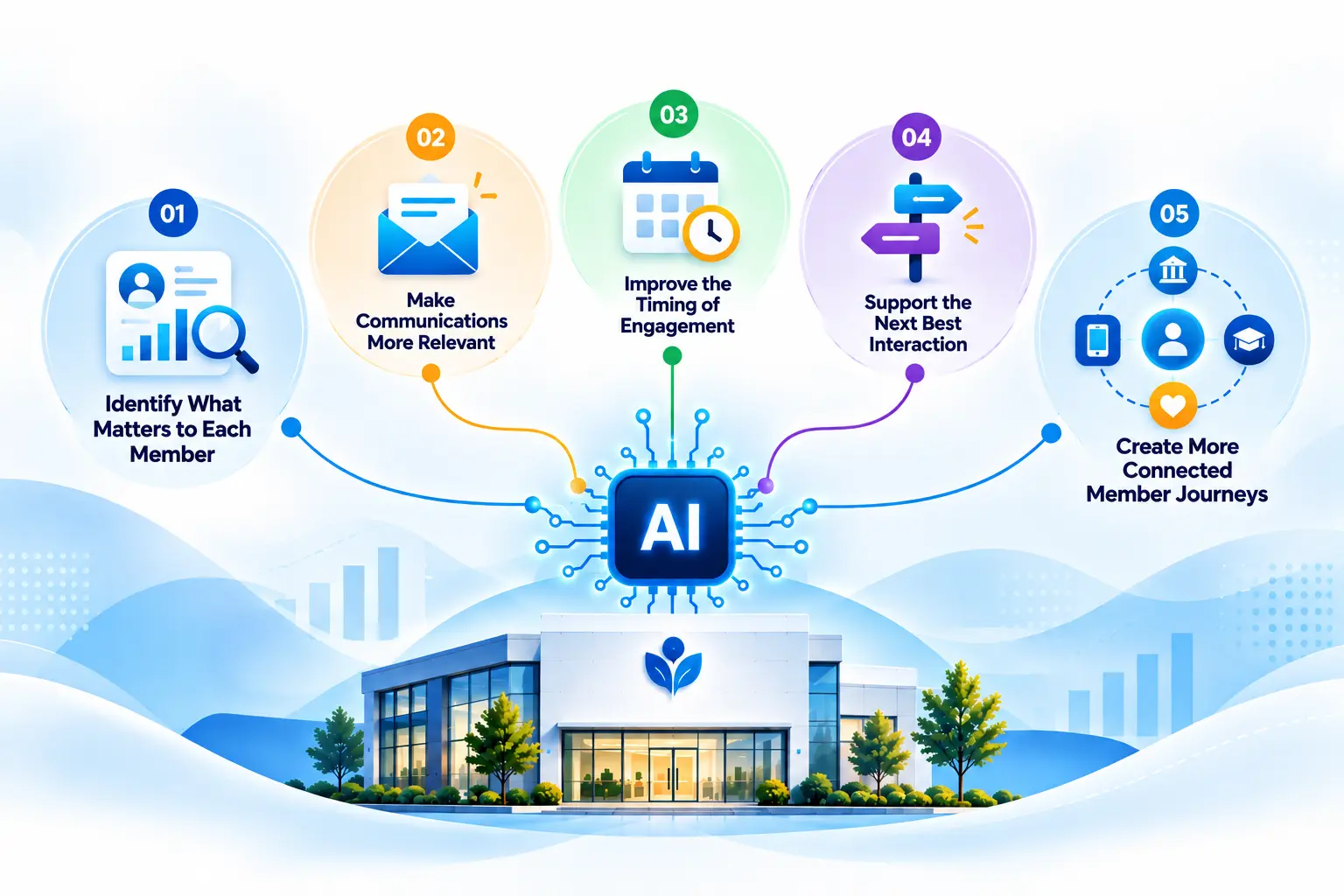
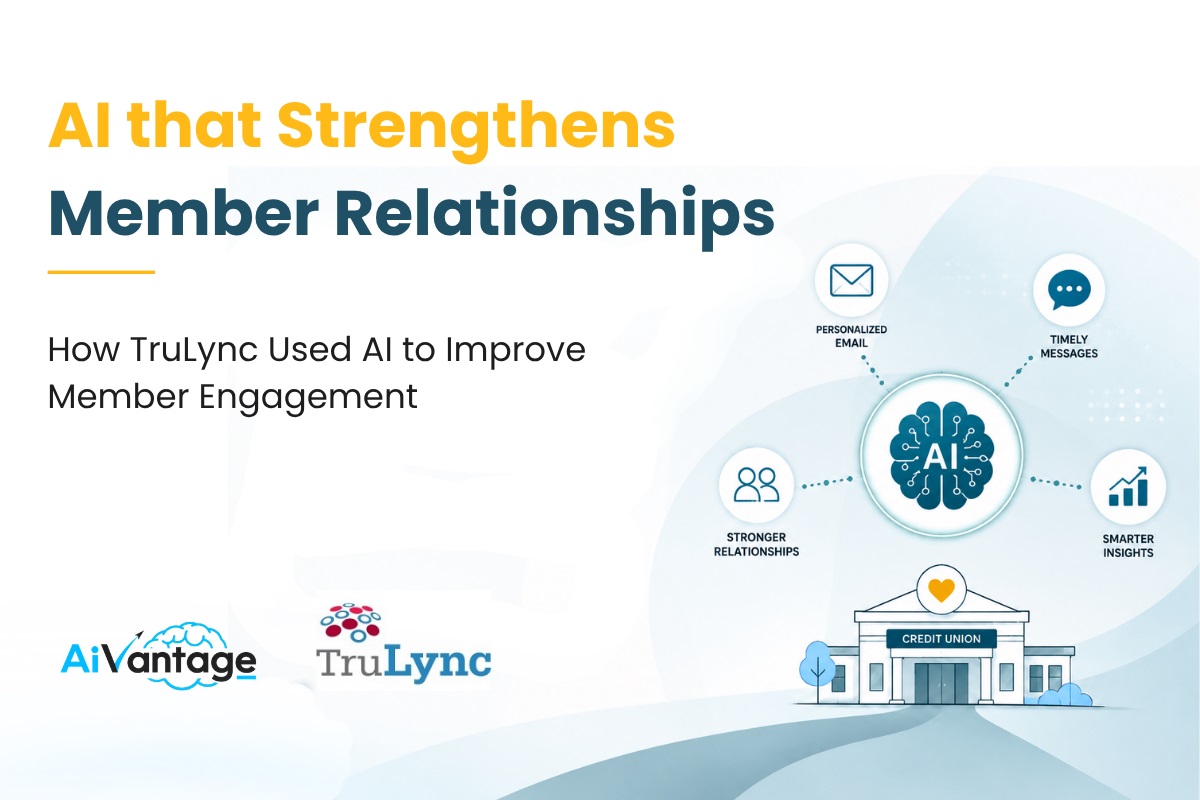
AI can help credit unions make sense of the many signals they already have about their members. The real benefit is not simply better data analysis. It is using those insights to make member interactions more timely, relevant, and useful.
1. Identify What Matters to Each Member
A member’s account activity, digital behavior, product relationships, and past interactions can reveal useful signals.
AI can bring these signals together to help marketing teams understand when a member’s needs may be changing. For example, a change in digital activity could indicate that a member may need guidance, education, or a different type of support. This helps credit unions move beyond broad assumptions and respond to what may actually matter to the individual member.
2. Make Communications More Relevant
Sending the same message to everyone can make marketing feel generic.
AI can help match content and communication with a member’s interests, behavior, and relationship with the credit union. Instead of promoting the same product across a broad segment, the credit union can provide information that has a clearer reason to be relevant.
That can make communication feel more useful rather than simply promotional.
3. Improve the Timing of Engagement
Even a relevant message can lose its impact if it arrives at the wrong time.
AI can analyze engagement patterns and other signals to help identify when an interaction may be more appropriate. This can help marketing teams avoid unnecessary outreach and focus on moments when a member may be more receptive.
4. Support the Next Best Interaction
AI can also help credit unions think beyond, What should we promote next?
A better question is: What would be most useful for this member right now?
The answer might be a product offer, financial education, a digital banking reminder, or even no communication at all.
This gives marketing teams more context when deciding what action to take.
5. Create More Connected Member Journeys
Member engagement does not happen through one campaign. It develops across multiple interactions.
AI with hyper-personalization can help connect those interactions across onboarding, digital banking, product education, financial wellness, and re-engagement. The result is a more connected experience where each interaction builds on what the credit union already knows about the member.
The bigger opportunity is simple: use AI to make marketing less about sending more messages and more about making each interaction more relevant.
What Does AI-Powered Member Engagement Look Like in Practice? Explained with a Simple Example!
The value of AI-powered member engagement becomes clearer when we look at how it can work in a real marketing scenario.
Suppose, a member who regularly uses mobile banking but has recently reduced their digital activity. Instead of treating this as just another data point, AI can look at other relevant signals, identify a change and respond with a more relevant interaction, such as helpful guidance on digital banking features or a message designed to re-engage the member.
The process looks like this:
Member signals → AI identifies a pattern → Marketing team adds context → Relevant communication → Member response → Measure and refine
The important part is what happens between the data and the message.
AI helps marketing teams understand why an interaction may be relevant, while the team decides how and whether to act on that insight.
How Credit Unions Can Start With AI Marketing?
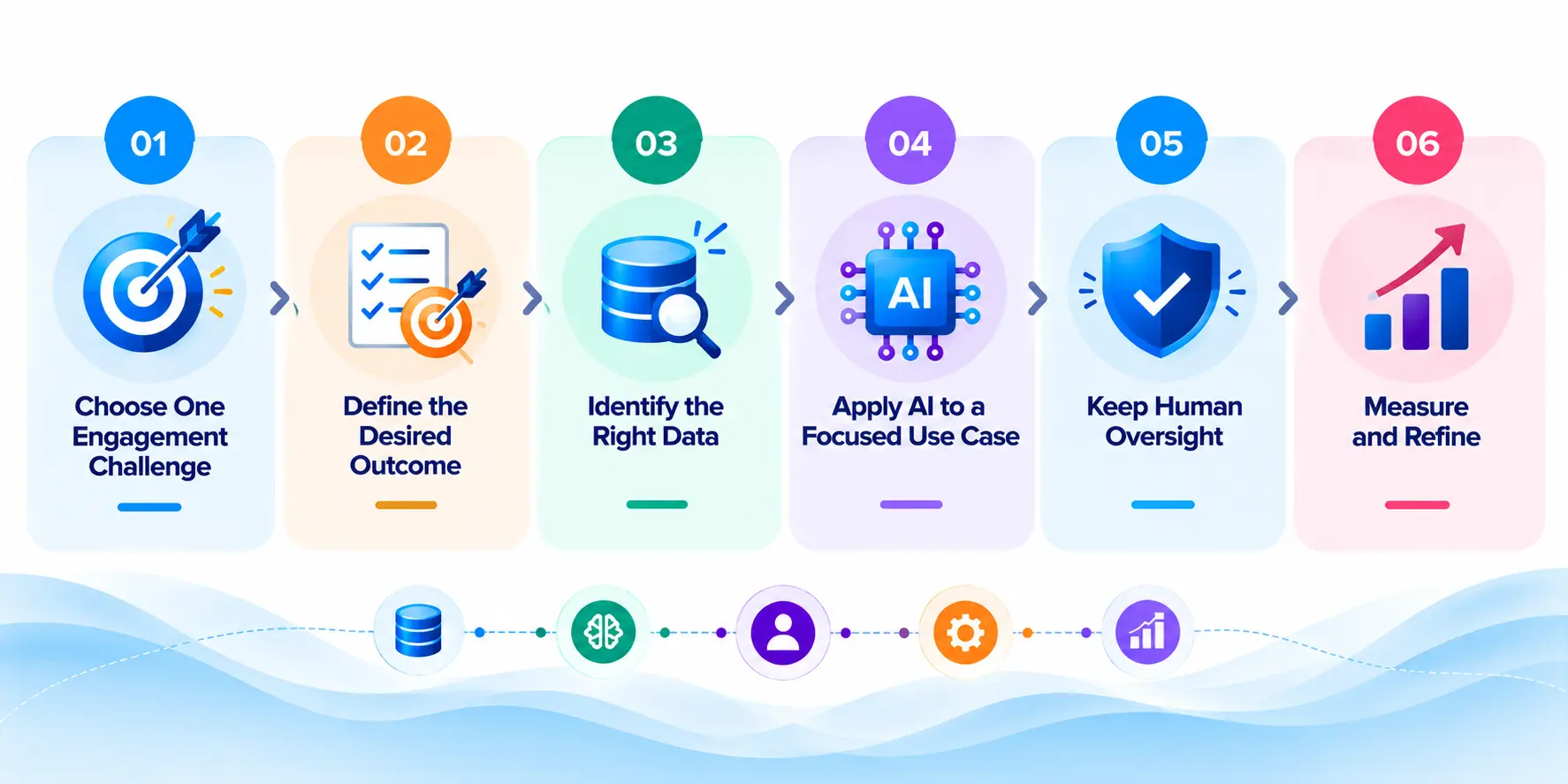
Credit unions do not need to overhaul their entire marketing strategy to start using AI. A focused use case can provide a practical starting point.
1. Choose One Engagement Challenge
Start with a specific problem, such as low digital adoption, weak campaign response, or member re-engagement.
2. Define the Desired Outcome
Be clear about what should improve. That could mean more digital banking adoption, stronger campaign engagement, or better product education.
3. Identify the Right Data
Determine which member signals can help address the problem. Avoid collecting or using data simply because it is available.
Often,credit unions have plenty of data but may not know which signals matter or how to put that data to work.
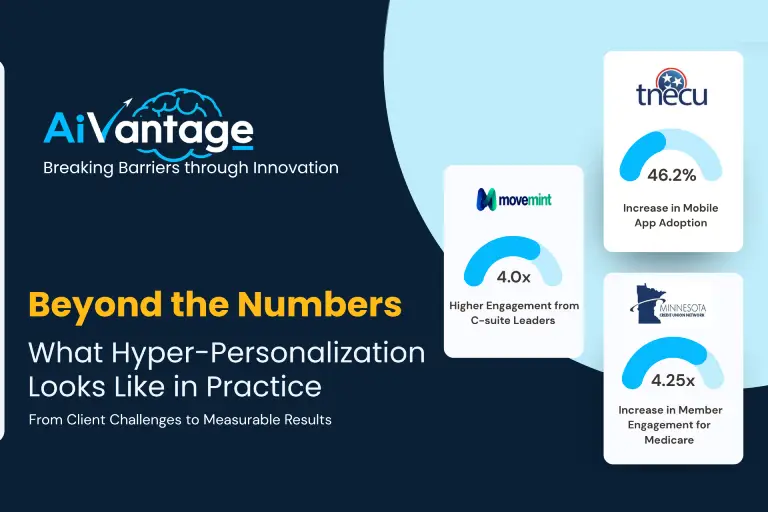
This is where AiVantage can step in. With its AI readiness approach, AiVantage takes the process a step further, helping credit unions identify the right data, understand its value, and turn it into actionable member insights.
Instead of looking at data only for broad segmentation, its approach focuses on turning member intelligence into more individualized engagement opportunities.
4. Apply AI to a Focused Use Case
Test AI within a defined campaign or member journey. For example, a credit union could focus on digital adoption, financial education, or re-engaging members who show signs of declining activity.
AiVantage’s 1:1 personalization approach can help credit unions move beyond sending one campaign to an entire segment and toward more context-aware member communication.
5. Keep Human Oversight
Marketing teams should review AI-driven insights and communication to make sure they fit the credit union’s goals, standards, and member expectations.
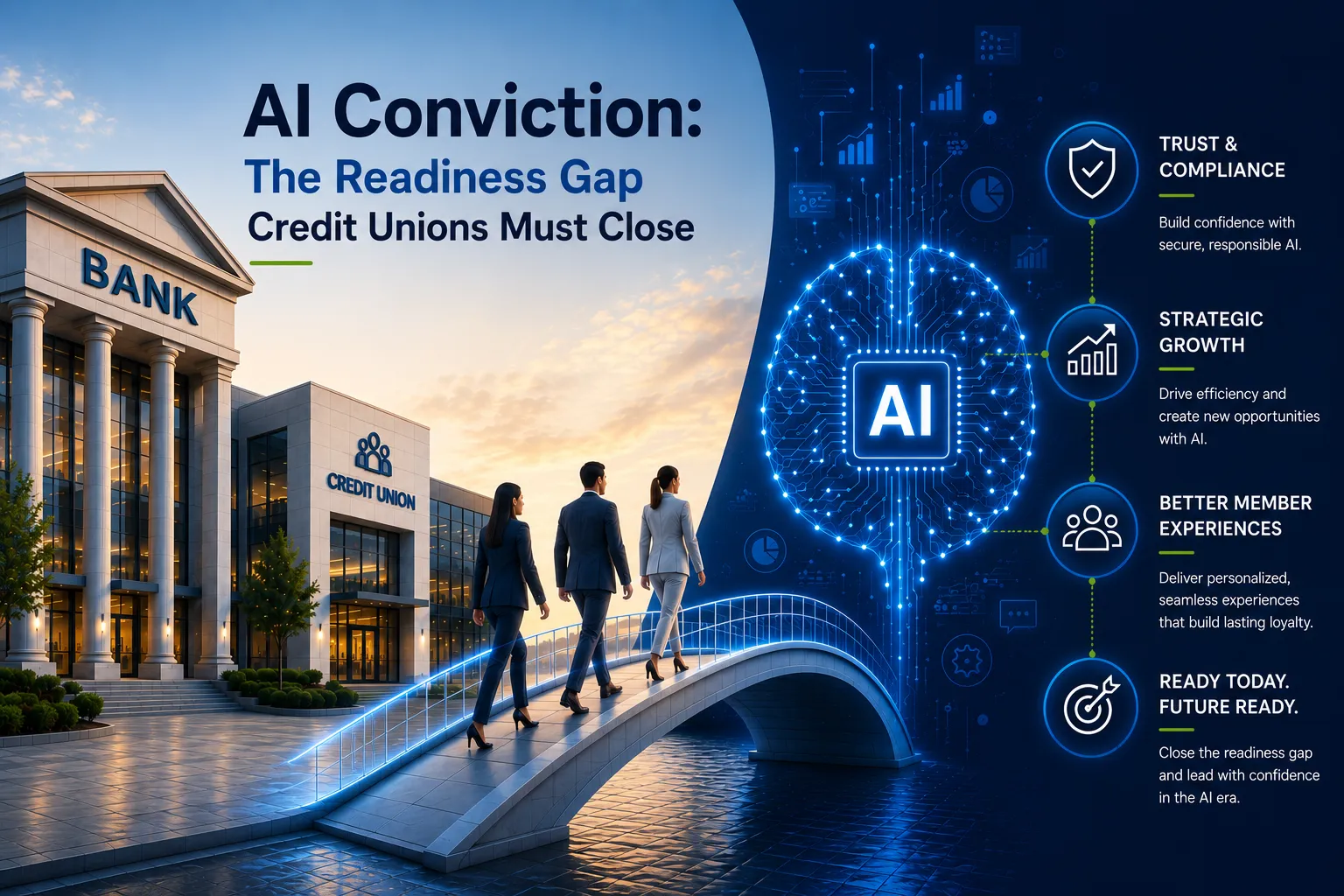
AiVantage has a built-in Trust & Compliance layer that helps ensure campaigns follow applicable rules, policies, and regulatory requirements, reducing the risk of overlooked rules and violation while minimizing the need for manual oversight, and keeping human review only where it is required. It is designed to support this relationship rather than replace it. The technology can help teams identify relevant opportunities, while people remain responsible for judgment, context, and the member relationship.
6. Measure and Refine
Track the metrics that connect to the original goal. Look at engagement, response, adoption, or other outcomes that matter to the specific use case.
This is another area where AiVantage goes beyond simply generating insights.
The focus is on connecting data → intelligence → personalization → action → measurement, so credit unions can learn from each engagement and refine future interactions.
The principle is simple: start focused, learn from the results, and scale what works.
What Credit Unions Need Before Scaling AI Marketing?
AI marketing works best when the foundation is strong. Before expanding an AI marketing strategy, credit unions need to look beyond the technology itself.
-
Start With Reliable Data
AI depends on the information it receives. Incomplete, outdated, or disconnected data can make it harder to identify meaningful member signals.
Credit unions should understand what data they have, where it comes from, and whether it is reliable enough for the intended use case.
-
Protect Member Privacy
Member data requires careful handling. Credit unions should establish clear rules around data access, usage, security, and consent where applicable.
Privacy should remain part of the strategy from the beginning, not something added after implementation.
-
Establish AI Governance
Credit unions also need clear oversight around how AI supports marketing decisions.
The NCUA’s AI resources for credit unions highlight areas such as risk management, data security, privacy, model risk, and third-party due diligence when evaluating AI solutions.
-
Define What Success Means
AI implementation should connect to a clear business or member-engagement goal.
Before launching a campaign, ask: What are we trying to improve, and how will we know if it worked?
A focused goal makes it easier to choose the right data, use case, technology, and metrics. Strong data, responsible governance, clear goals, and human oversight give credit unions a stronger foundation for scaling AI marketing.
How Should Credit Unions Measure AI Marketing Success?
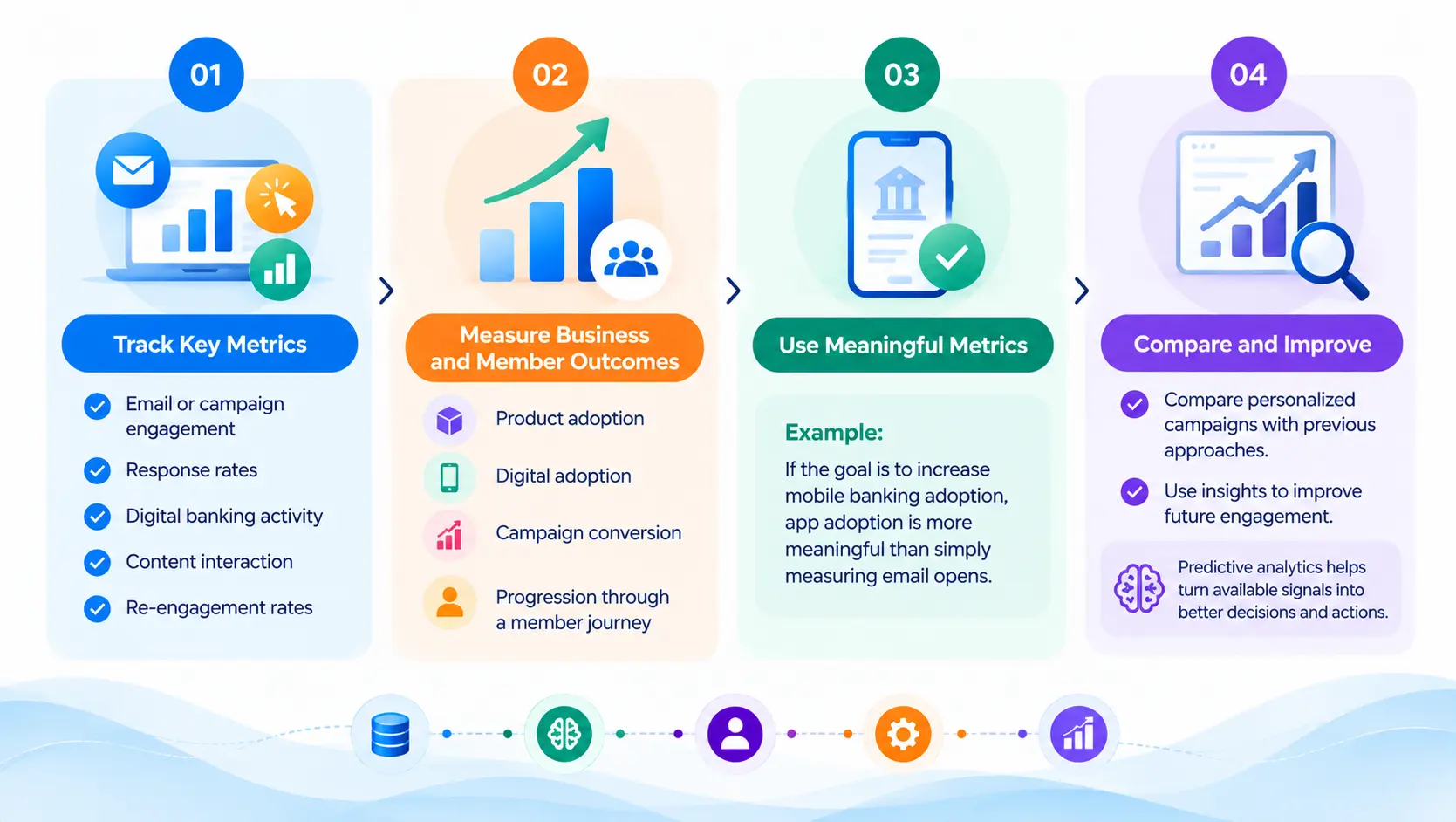
Look at metrics such as:
- Email or campaign engagement
- Response rates
- Digital banking activity
- Content interaction
- Re-engagement rates
Also, measure Business and Member Outcomes
Credit unions can also track outcomes such as product adoption, digital adoption, campaign conversion, or progression through a member journey.
For example, if the goal is to increase mobile banking adoption, app adoption is more meaningful than simply measuring email opens.
Compare Results Over Time
Compare personalized campaigns with previous approaches, monitor how members respond, and use those insights to improve future engagement.
This is where predictive analytics can become more valuable: the goal is not simply to understand what happened, but to use available signals to support better decisions and actions.
Conclusion
Credit unions do not have a shortage of member data. The bigger challenge is turning that data into interactions that feel relevant to the individual member.
AI marketing for credit unions can help bridge that gap by identifying meaningful signals, improving personalization, supporting better timing, and helping marketing teams make more informed engagement decisions.
The key is to start with a clear member need, use the right data, maintain strong governance, and measure what actually changes.
AiVantage takes this approach beyond traditional segmentation through 1:1 personalization, helping credit unions use member intelligence to create more relevant engagement at scale. Connect with our experts today to know more!
Frequently Asked Questions(FAQs)
What is hyper-personalization in credit unions?
Hyper-personalization uses member data and AI to tailor communication to an individual member’s behaviors, needs, and context rather than relying only on broad segments. It can make personalized member engagement more relevant and timely.
How can AI support the member journey?
AI can analyze member signals across different stages, such as onboarding, digital banking adoption, product education, and re-engagement. This helps credit unions deliver more relevant member journey personalization at the right moments.
What data can credit unions use for AI marketing?
Credit unions can use relevant data such as product relationships, transaction patterns, digital activity, communication history, and engagement signals. Member data analytics can help identify patterns that support more relevant marketing decisions.
Can AI replace human marketing teams?
No. AI marketing can support marketing teams by analyzing data, identifying patterns, and helping personalize communication. Human teams still provide judgment, context, oversight, and relationship-building.
What should credit unions consider before implementing AI marketing?
Credit unions should consider data quality, privacy, security, AI governance, compliance, human oversight, vendor due diligence, and measurement. A focused use case can help establish a strong foundation before scaling AI marketing.